




What if you could capture the timeless prestige of a Parisian apartment without the delicate upkeep and exorbitant price tag of solid timber? For many homeowners, the dream of a classic parquet pattern often feels out of reach, shadowed by the fear that a more affordable alternative might look "fake" or fail under the pressure of a busy household. However, modern herringbone laminate flooring has redefined these expectations, offering a seamless blend of high-end aesthetics and "fit and forget" durability that rivals engineered wood in both appearance and performance.
We understand that choosing a floor is a significant commitment, which is why this guide provides a clear path through the selection process. You will discover how to navigate essential technical specifications, from the resilience of AC4 durability ratings to the unique A and B plank installation system. By exploring the latest innovations in waterproof technology and authentic textures, you can confidently select a floor that balances sophisticated design with the practical longevity your home deserves.
Key Takeaways
- Discover why modern herringbone laminate flooring has become the go-to choice for achieving a sophisticated parquet aesthetic with enhanced durability.
- Learn how to navigate technical specifications, such as AC ratings and plank thickness, to find a floor that perfectly matches your room's traffic levels.
- Compare the most popular colour palettes, from traditional natural oak to contemporary greys, to find the ideal match for your interior design style.
- Understand the essential A and B plank system and the importance of expansion gaps to ensure a professional, long-lasting installation in the UK climate.
- Find out how to access curated collections from premium brands like Woodpecker and Ted Todd to elevate your home renovation project.
Why Herringbone Laminate Flooring is a Design Staple in 2026
The current landscape of British interior design is defined by a distinct move towards "attainable luxury." Homeowners are increasingly prioritising materials that offer the visual weight of heritage craftsmanship without the associated high-maintenance lifestyle. Herringbone laminate flooring has emerged as the primary solution for this shift. Unlike traditional solid blocks, this is a sophisticated, multi-layered synthetic floor. It features a high-density fibreboard core topped with a photographic layer that captures every nuance of natural grain, finished with a transparent wear layer for ultimate protection. Laminate flooring technology has reached a point where the distinction between synthetic and organic surfaces is almost imperceptible to the untrained eye.
This material offers several core benefits that make it a staple for modern renovations. It provides exceptional scratch and fade resistance, ensuring that high-traffic areas or sun-drenched conservatories maintain their lustre over time. Whilst engineered wood flooring remains a prestigious choice for many, laminate is often favoured for its superior resistance to the spills and scuffs of family life. It is a cost-effective alternative that allows for grand designs on a more accessible budget, making it possible to floor entire open-plan levels without compromise.
The Aesthetic Appeal of the Parquet Pattern
The V-shaped pattern of herringbone is a powerful architectural tool. In smaller UK dwellings or narrow entryways, the diagonal lines draw the eye towards the corners of the room, creating an effective illusion of increased space. Historically, this pattern was a signifier of bespoke craftsmanship in European estates. Today, herringbone laminate flooring democratises this look. Because the surface is printed, it allows for more adventurous colour palettes, from cool contemporary tones to rich, reclaimed-style textures that are difficult to source in natural timber.
Laminate vs. Real Wood: The Practical Trade-off
Choosing between materials often involves balancing the sensory experience with daily utility. Real wood is celebrated for its warmth underfoot and the unique way it ages. However, laminate offers a level of "toughness" that is vital for busy households. The wipe-clean nature of the surface means you don't have to fret over muddy paws or spilled wine. For large open-plan living areas, the budget considerations are equally important. Choosing laminate can free up significant funds for other high-impact elements of your project, such as bespoke kitchen joinery or premium lighting, whilst still achieving that high-end parquet aesthetic.
Technical Specifications: AC Ratings, Thickness, and Texture
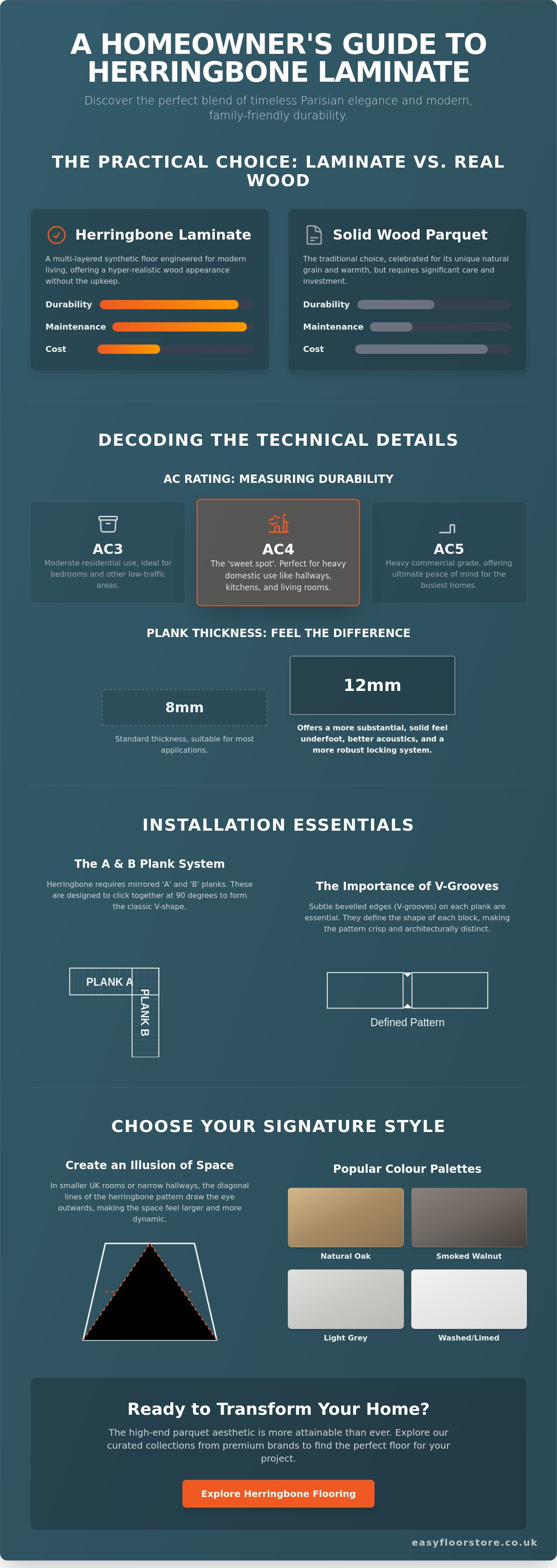
Selecting high-quality herringbone laminate flooring requires an understanding of the engineering beneath the surface layer. Whilst the visual design provides the immediate impact, the structural thickness—typically ranging from 8mm to 12mm—dictates the floor's long-term stability. A 12mm plank offers a more substantial acoustic profile, creating a solid "thud" underfoot that mimics real timber. This added depth also facilitates a more robust click-locking mechanism, which is essential for maintaining the integrity of the 90-degree joins required in a herringbone layout.
The V-groove edge is another vital technical detail for this specific pattern. Unlike standard planks where you might prefer a seamless finish, herringbone blocks require bevelled edges to define their individual shape. These small grooves ensure the pattern remains crisp and architecturally distinct, even in different lighting conditions. If you're beginning to compare different board constructions, you can explore our full range of laminate flooring to see these details in person.
Understanding AC Ratings for High-Traffic Areas
The durability of the wear layer is measured by its AC Rating, or Abrasion Class. For most British homes, AC4 is the "sweet spot" for performance. It is tough enough to withstand the daily friction of kitchen chairs, pet claws, and heavy footfall without the design layer fading. Whilst AC3 is suitable for bedrooms, we recommend AC4 or even AC5 for hallways and open-plan living rooms. AC5 is a heavy commercial grade that offers ultimate peace of mind for those seeking a truly "fit and forget" solution.
Texture and Finish: Making it Look Authentic
The secret to a realistic wood-grain feel is "Embossed in Register" (EIR) technology. Older laminates often featured a generic, repetitive texture that didn't align with the printed image. EIR solves this by synchronising the physical surface texture with the photographic grain below. When you touch a knot or a grain line, you feel exactly what you see. This tactile realism, combined with modern matt or silk finishes, prevents the floor from appearing overly shiny or synthetic. The way these textures interact with natural light adds a layer of sophistication that flat alternatives simply cannot replicate.
Choosing Your Style: From Natural Oak to Modern Grey
Selecting the right aesthetic for your home is often the most enjoyable part of the renovation journey. The herringbone pattern carries a rich architectural history, once reserved for grand Italian domes and stately manors. Bringing this into a modern context requires a careful balance of colour and scale. Today's herringbone laminate flooring options range from sun-bleached pines to deep, moody walnuts, allowing you to curate a space that reflects your personality whilst maintaining practical durability.
Plank width plays a vital role in the final look. Narrower planks create a more intricate, traditional feel that works beautifully in smaller rooms or period properties. Conversely, wider planks offer a more contemporary, calm appearance by reducing the number of visible joints. This choice significantly impacts the visual "busyness" of your floor. It's worth considering your room's existing furniture and decor density before deciding on the plank dimensions.
The Rise of Warm Tones and Muted Oaks
Whilst cool greys dominated the interior design world for years, we're seeing a distinct shift towards warmer, more organic palettes. Muted "greige" and honey-toned oaks have become the new favourites for British homeowners. These shades offer a timeless quality that pairs effortlessly with traditional white skirting boards or more daring, dark-painted woodwork. If you're working with a north-facing room that lacks natural light, a light oak finish can act as a mirror, bouncing available light around the space to make it feel airy and welcoming.
Creating Contrast with Dark and Smoked Finishes
For those seeking a dramatic, luxury hotel aesthetic, dark smoked or walnut effects are an excellent choice. These deep tones are particularly effective at anchoring large rooms with high ceilings, providing a sense of grandeur and intimacy. You should be aware that darker surfaces tend to show dust and pet hair more readily than their lighter counterparts. To keep these floors looking their best, a regular dry-mopping routine is usually sufficient. Styling these rich finishes with brass accents or industrial iron hardware creates a sophisticated, modern contrast that feels both intentional and high-end.
Installation Logistics: A and B Planks Explained
Whilst standard planks only require one type of click joint, the intricate geometry of a herringbone layout demands a specific "A and B" system. This is often the biggest surprise for DIY enthusiasts. To create the iconic 90-degree interlocking "V" shape, your herringbone laminate flooring arrives in two distinct types of packs. One set of planks is the mirror image of the other. If you try to install a herringbone floor with only one plank type, the pattern simply will not close. It's a precision job that requires careful organisation before you even open the first box.
The UK's fluctuating climate also plays a significant role in your installation strategy. Laminate is a wood-based product, which means it will naturally expand and contract as humidity levels change throughout the seasons. You must leave a consistent expansion gap around the perimeter of the room, typically hidden by skirting boards or scotia. Without this small breathing space, the floor can buckle or peak, ruining the sleek aesthetic you've worked hard to achieve. If you're ready to start your project, you can browse our full range of herringbone flooring to find the perfect match for your home.
Professional installers always start in the centre of the room rather than against a wall. By establishing a central "spine" for the pattern, you ensure that the design remains symmetrical as it reaches the edges of the space. This prevents the "lopsided" look that often occurs in amateur installations. To support this structure, a high-quality underlay is non-negotiable. It provides essential sound reduction, preventing that hollow "clack" sound, and acts as a vital moisture barrier for ground-floor rooms.
The Importance of Subfloor Preparation
A perfectly flat subfloor is the foundation of a successful herringbone installation. Because the planks are smaller and the pattern is more complex, any slight dip or hump in the floor will be magnified, potentially causing the click joints to fail over time. If you're installing on a ground floor, always use an underlay with an integrated Damp Proof Membrane (DPM). Before you begin, walk across the subfloor to check for any "bounce" or movement. Addressing these issues now prevents irritating squeaks and structural problems later.
Underfloor Heating Compatibility
Most modern laminate options are fully compatible with underfloor heating (UFH), but you must verify that your specific choice is "UFH approved." The thickness of your herringbone laminate flooring directly affects its thermal conductivity; a 12mm plank might take slightly longer to warm up than an 8mm version, but it will often retain the heat more effectively. When turning your heating on for the first time, use a gradual "ramp-up" process. Increasing the temperature by just a few degrees each day allows the planks to acclimatise without the risk of warping or joint separation.
Why Source Your Herringbone Floor from Easy Floor Store?
Choosing the right herringbone laminate flooring is a significant milestone in any home renovation project. It's an investment in your property's value and your daily comfort. At Easy Floor Store, we act as your steady hand, guiding you through a vast array of choices with the expertise of a seasoned professional. We don't just stock any product. We curate a collection of premium brands like Woodpecker and Ted Todd, ensuring that every plank meets our high standards for aesthetic beauty and structural integrity.
The professionals at Easy Floor Store take genuine pride in their craft, treating every customer interaction with a level of care that transforms a complex purchasing decision into a stress-free experience. We understand that you aren't just buying a floor; you're creating a home. This shared responsibility is why we focus on high-performance products that offer long-term durability and "fit and forget" reliability.
Expert Curation of Premium Brands
We select our manufacturers based on the reliability of their click systems, which is particularly vital for the complex geometry of herringbone patterns. A specialist retailer offers a level of insight that general DIY "big box" stores simply cannot match. We provide access to matching accessories, including scotia and door bars, which are essential for a seamless finish. This attention to detail ensures that your new floor looks like a professional, bespoke installation rather than a DIY afterthought.
National Delivery and Customer Support
Our commitment to your project extends far beyond the checkout. We organise nationwide distribution to ensure your materials arrive safely and on time, keeping your renovation schedule on track. Calculating the exact meterage for a herringbone layout can be tricky. The pattern typically requires 10% to 15% wastage to account for the intricate cuts at the room's edges. Our experts are here to help you get these numbers right the first time.
We strongly encourage you to order samples before making your final decision. Seeing the texture and colour under your specific lighting conditions is the best way to ensure the result matches your vision. If you have any questions about which AC rating or thickness is right for your room, our team is ready to provide the specialist advice you need. Ready to transform your space? Browse our full collection or contact us today to begin your journey.
Transform Your Space with Confidence
Achieving the timeless elegance of a parquet floor has never been more accessible or practical. By selecting high-quality herringbone laminate flooring with an AC4 rating and Embossed in Register texture, you ensure a finish that is as resilient as it is beautiful. Success lies in the details; from preparing a perfectly flat subfloor to mastering the A and B plank installation system, every step contributes to a professional result. You don't have to navigate these technical choices alone.
At Easy Floor Store, we act as your trusted partner throughout your renovation journey. We offer an expertly curated range from premium brands like Woodpecker and Ted Todd, backed by the technical support you need to calculate wastage and select the ideal accessories. With our nationwide UK delivery, your dream renovation is within reach. We're here to help you create a home that reflects your style whilst standing up to the demands of modern life.
Explore our curated collection of herringbone laminate flooring and take the first step toward your new floor today.
Frequently Asked Questions
Is herringbone laminate flooring harder to install than regular laminate?
Yes, herringbone laminate flooring is more challenging to install than standard straight planks. The process requires establishing a central starting point and making precise diagonal cuts at the edges of the room. Whilst standard laminate often follows a simple "click and go" method, herringbone demands meticulous alignment to keep the pattern straight. If you're a DIY beginner, we suggest taking extra time to plan your layout before opening the packs.
Can I use herringbone laminate in my kitchen or bathroom?
Yes, you can use it in kitchens if you choose a product with an integrated waterproof or water-resistant surface. Many 2026 laminate innovations feature advanced coatings that prevent moisture from seeping into the joins. However, we advise caution in bathrooms where standing water is common. Always check the specific manufacturer's warranty to ensure the product is rated for high-humidity environments before proceeding with your purchase.
What is the difference between herringbone and chevron patterns?
The primary difference lies in the way the planks join together to form the pattern. In a herringbone layout, rectangular planks overlap at a 90-degree angle to create a broken "zigzag" effect. In contrast, chevron planks are cut at an angle at both ends, meeting in a perfectly straight line to form a continuous "V" shape. This subtle distinction significantly changes the visual rhythm and architectural feel of your room.
How much extra wastage should I order for a herringbone floor?
You should order approximately 15% extra for wastage when installing a herringbone pattern. This is higher than the standard 5% to 10% required for straight planks because the intricate nature of the design results in more offcuts at the perimeter. Accurate metreage is vital to ensure you don't run out of material mid-project. Our team is always available to help you calculate the exact amount needed for your specific room dimensions.
Does herringbone laminate flooring need a specific type of underlay?
Yes, a high-density, compression-resistant underlay is necessary to support the intricate click joints of herringbone planks. Because the pattern has more joins per square metre than standard flooring, the subfloor must be perfectly stable to prevent movement. We recommend using an underlay with an integrated vapour barrier (DPM) for ground-floor installations. This protects the laminate core from rising damp whilst providing the acoustic insulation needed for a quiet home.
Is herringbone laminate compatible with electric underfloor heating?
Most modern herringbone laminate flooring is compatible with electric underfloor heating, provided it is installed correctly. You must ensure the surface temperature doesn't exceed the manufacturer's limit, which is typically 27°C. It's also essential to use a compatible underlay that allows for efficient thermal transfer. We always advise checking the technical data sheet for "UFH approved" status before starting your installation to maintain your product warranty.
How do I clean and maintain my herringbone laminate to keep it looking new?
Maintain your floor by using a dry microfibre mop or a vacuum with a soft brush attachment for daily cleaning. To remove stubborn marks, use a well-wrung, damp cloth with a specialist laminate cleaner. Avoid using steam mops or excessive water, as moisture can eventually damage the fibreboard core if it penetrates the joins. Placing felt pads under furniture legs and using mats at external doorways will also protect the wear layer from scratches.
Why do I need 'A' and 'B' planks for my herringbone installation?
You need A and B planks because they are designed as mirror images of each other to form the interlocking pattern. In a standard floor, all planks are identical, but herringbone requires the tongue and groove to be on opposite sides for the 90-degree join to work. Without both types, the click system will not engage in a zigzag layout. Most manufacturers package these separately to help you organise your installation systematically.