




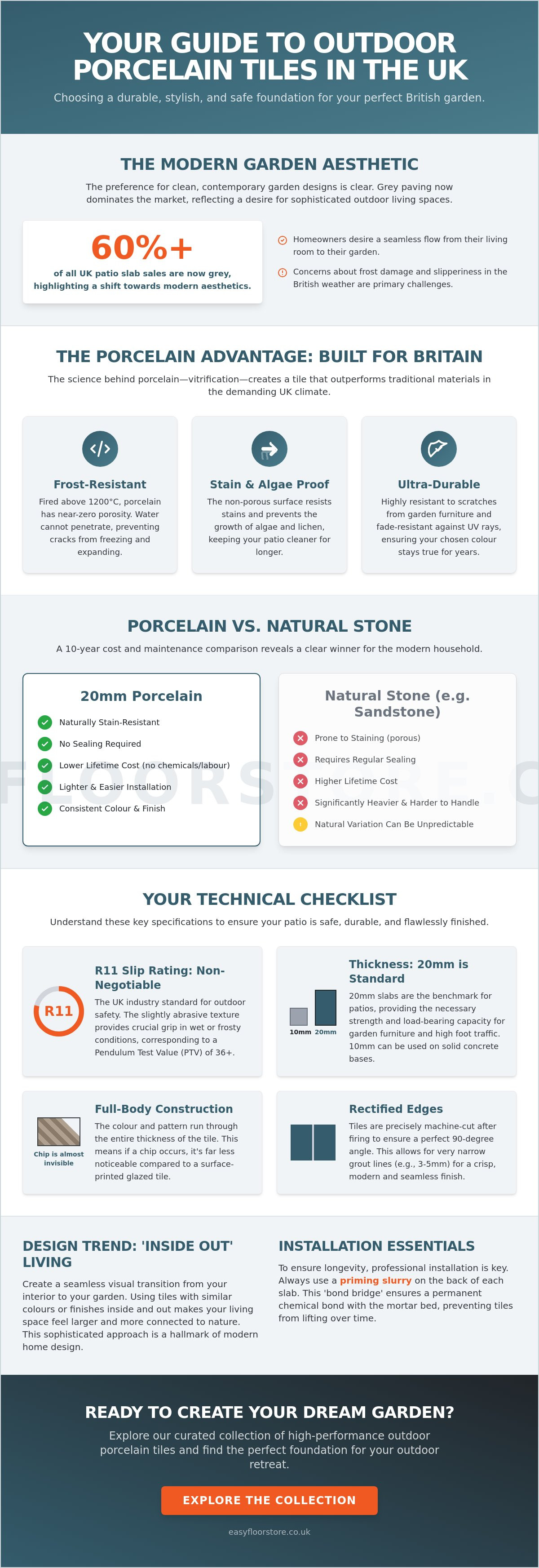
Did you know that grey paving slabs now account for over 60% of all UK patio sales? This clear preference for modern, clean lines shows just how much we value a polished garden aesthetic, yet choosing the right outdoor porcelain tiles UK homeowners can rely on requires a bit of specialist knowledge. You likely want a garden that feels like a natural extension of your living room, but the unpredictable British weather often brings worries about frost damage or tiles becoming treacherous when wet.
We believe your outdoor space should be a source of relaxation rather than a maintenance burden. This guide will show you how to select tiles that are durable, frost-resistant, and stylish, allowing you to create a retreat that stands up to the elements. You will learn how to balance vitrification and slip resistance to ensure your patio is as safe as it is sophisticated.
We'll explore the essential differences between 10mm and 20mm thickness, the importance of the R11 anti-slip rating, and how the shift toward 900x600mm slabs is redefining modern garden design. By the end, you'll have the confidence to choose a finish that offers a seamless flow from your interior to your garden with minimal upkeep required.
Key Takeaways
- Learn how the vitrification process creates a frost-resistant, near-zero porosity surface that outperforms natural stone in the unpredictable British climate.
- Identify the essential technical specifications you need, including why an R11 slip rating is the non-negotiable safety standard for outdoor porcelain tiles UK.
- Determine whether 10mm or 20mm thickness is appropriate for your project based on your sub-base requirements and desired finish.
- Explore the "Inside Out" design trend to create a seamless, sophisticated transition between your interior living space and your garden retreat.
- Discover the practical installation steps that ensure longevity, such as the vital use of a priming slurry bond bridge and the correct grout selection.
Why Outdoor Porcelain Tiles are the Gold Standard for UK Gardens
Selecting the right foundation for your garden is a structural decision that impacts your home's value for decades. The reason outdoor porcelain tiles UK gardens have seen such a surge in popularity lies in the science of vitrification. During manufacturing, porcelain is fired at temperatures exceeding 1200°C to meet rigorous British Standards like BS EN 14411:2016. This process fuses the clay particles into a dense, glass-like substance, creating a surface with near-zero porosity. You can explore more about Porcelain tile properties and standards to understand how these manufacturing processes ensure a product that remains impervious to the elements.
For homeowners in Britain, this density is a game-changer. Traditional materials often absorb water, which then expands when it freezes. This leads to hairline cracks that eventually ruin a patio. Porcelain’s frost-resistant nature eliminates this risk entirely. Because moisture cannot settle within the tile, it also prevents the growth of algae and lichen amongst the joints, a common sight on damp UK terraces. Your garden remains clean and vibrant without the constant battle against green spores.
Durability Meets Sophisticated Design
Porcelain is incredibly resilient. Unlike some natural materials that bleach under UV rays, these tiles are fade-resistant. This ensures the deep charcoal or warm beige colour you choose stays true for years. It's a surface built for real life. Scratches from heavy iron furniture aren't a concern, and the material stands up to the enthusiastic behaviour of family pets. As specialists, we view high-quality outdoor porcelain tiles UK as a lifetime investment that secures your home’s aesthetic appeal without the worry of wear and tear.
Porcelain vs Natural Stone: A Comparison
Many people compare 20mm porcelain slabs to traditional sandstone. Whilst sandstone offers a classic look, it's often significantly heavier and harder to handle during installation. More importantly, natural stone is thirsty. It requires regular sealing to prevent staining and water damage, whereas porcelain is naturally stain-resistant. When you look at the 10-year cost-benefit, porcelain wins. You save time and money on chemical sealants and intensive cleaning. This makes it the most practical choice for a modern, busy household.
Technical Specifications: What to Look for Before You Buy
Selecting the right tile isn't just about the visual appeal; it's about the technical integrity of your garden build. High-end porcelain is the result of continuous innovations in material science, which have allowed manufacturers to create slabs that are tougher and more resilient than traditional ceramics. When you browse for outdoor porcelain tiles UK suppliers provide, you'll encounter specific terminology that defines how the tile will perform under your feet and against the elements.
Full-body porcelain is a superior choice for high-traffic outdoor areas. This specification means the colour and pattern run through the entire thickness of the tile rather than just being printed on the surface. If a heavy object is dropped and a small chip occurs, it's almost invisible because the material is consistent throughout. We also recommend choosing tiles with rectified edges. Rectification involves machining the tile edges to a precise 90-degree angle after firing. This allows your installer to use incredibly narrow grout lines, which creates the modern, crisp finish that homeowners desire.
The R11 Slip Rating Explained
Safety is paramount in a climate where rain is a frequent visitor. An R11 rating is the non-negotiable industry benchmark for external safety in the UK. Unlike internal tiles, which are often R9 or R10 and feel smooth to the touch, R11 tiles have a distinct, slightly abrasive texture. This texture provides the vital friction needed to prevent slips when the patio is wet or covered in a light morning frost. For public safety standards, a Pendulum Test Value (PTV) of 36 or higher in wet conditions is the required threshold for low slip potential.
Thickness and Load-Bearing Capacity
Thickness determines your installation method and the overall durability of the patio. 20mm slabs are the standard for most outdoor porcelain tiles UK projects. Their weight and structural strength allow them to be laid on versatile bases like sand, gravel, or even adjustable pedestal systems. This is particularly useful for gardens where drainage is a priority or where you need to hide cables and pipes beneath the surface.
Properly organising your sub-base is essential to support the weight of these slabs. Whilst 20mm is the versatile choice, 10mm tiles still have a place. These are typically used for balconies or roof terraces where a solid concrete slab is already in place. In these scenarios, 10mm tiles are adhesive-fixed to keep the height and weight of the installation manageable. Before you commit to a specific style, it's helpful to view our curated range of outdoor tiles to see how these technical specifications translate into beautiful, real-world designs.
Aesthetic Selection: Matching Tiles to Your Home’s Character
Designing a patio is an opportunity to extend your living space and enhance the architectural harmony of your property. One of the most significant shifts we've seen is the "Inside Out" trend. By selecting matching collections for both your kitchen and your garden, you create a visual flow that makes your home feel expansive and cohesive. When you browse the range of outdoor porcelain tiles UK homeowners prefer, you'll find that many ranges offer a 10mm indoor version and a 20mm outdoor equivalent, ensuring the transition across your threshold is perfectly flush.
Your choice of colour palette should complement the existing materials of your home. Cool grey tones remain a favourite for modern UK new builds, providing a neutral backdrop that makes garden furniture and greenery pop. For those with traditional period properties, porcelain tiles that mimic natural limestone or slate offer a timeless aesthetic. You get the rugged beauty of hand-cut stone without the porous nature that leads to staining. Similarly, wood-effect porcelain has become a popular solution for urban terraces. It provides the warmth and texture of timber whilst being immune to the rot and warping that plagues real wood in our damp climate.
Contemporary vs Traditional Finishes
Selecting the right texture significantly influences the garden's atmosphere. Concrete-look porcelain is ideal for minimalist, urban designs, offering a sleek and industrial feel. If you prefer a more rustic garden, riven-effect surfaces provide a tactile, uneven texture that replicates hand-cut stone. We often recommend large-format slabs, such as 900x600mm, for smaller patios. Using fewer grout lines reduces visual clutter, which tricks the eye into perceiving the space as much larger than it is. If you're paving a front garden, remember to consult UK government paving regulations to ensure your project meets the necessary permeability standards.
The Globo Basis Collection: Versatility in Design
For those seeking a curated balance of performance and style, the Globo Basis Collection has become a staple amongst UK designers. This range is celebrated for its consistent quality and its ability to suit diverse architectural styles. Whether you're looking for a subtle, earthy tone to blend into a country garden or a bold, dark slate effect for a multi-level city terrace, this collection provides the versatility needed. Using different textures from within the same colour family is a clever way to define specific zones, such as a dining area and a separate lounge space, without breaking the visual continuity of your outdoor retreat. This collection ensures you find the right outdoor porcelain tiles UK projects require for a high-end finish.
Standout Products from the Globo Basis Collection
Finding the right balance between aesthetic appeal and technical resilience is the core of our curation process. The Globo Basis range consists of high-performance vitrified slabs specifically engineered to withstand the harsh freeze-thaw cycles of a British winter. These aren't just surfaces; they're structural investments designed to maintain their integrity whilst elevating the visual character of your home. When sourcing outdoor porcelain tiles UK homeowners often look for a blend of longevity and style, which is exactly what this collection provides. Every slab undergoes a rigorous vitrification process, ensuring a density that resists moisture and prevents the structural failures common in cheaper alternatives.
We've hand-selected these products because they offer a sophisticated palette that works in harmony with the UK's unique light and landscape. From the subtle grain patterns that replicate natural minerals to the solid, monochromatic tones of contemporary architecture, the collection provides a steady hand for your design journey. By choosing from this exclusive range, you're opting for a product that has been vetted for its slip resistance, colour fastness, and ease of maintenance, making the transition from a vision to a finished patio entirely stress-free.
Top Picks for Modern Patios
For those aiming for a sleek, industrial aesthetic, the anthracite and deep grey tones within the collection are exceptional. These products feature the non-negotiable R11 anti-slip surface we discussed earlier, combined with precision-machined rectified edges for a seamless finish. They're particularly effective in large, open-plan entertaining areas where the uniform colour and minimal grout lines create a sense of architectural grandeur. The density of these vitrified slabs ensures they remain impervious to heavy foot traffic and furniture movement, keeping your social space looking pristine for years.
Warm Tones for Classic Gardens
If your property has a more traditional character, the beige and sand-coloured options offer a beautiful alternative to natural stone. These tiles mimic the soft textures of Cotswold stone but without the high maintenance requirements of porous rock. They're a brilliant choice for south-facing gardens, as they catch the evening sun and radiate a warm, inviting glow across the patio. Opting for these lighter colours can significantly brighten a shaded, north-facing patio by reflecting the available natural light into the space. To find the perfect match for your garden's orientation, you can explore our full outdoor tile gallery and compare the various finishes under different lighting conditions.
Planning Your Project: Practical Guidance and Common Mistakes
Executing a successful patio build requires more than just high-quality slabs. It demands a methodical approach to preparation. One of the most frequent oversights we see amongst homeowners is neglecting the priming slurry. Because outdoor porcelain tiles UK projects involve non-porous materials, they cannot form a mechanical bond with a standard sand and cement mortar bed. A polymer-modified primer, often called a "bond bridge," must be applied to the back of every tile to ensure it stays permanently fixed. Without this, your tiles may lift or "rock" after the first frost, leading to a costly repair.
Accuracy in your initial order is equally vital. We always recommend adding a 10% wastage allowance to your total area. This covers the inevitable cuts required for corners, drainage gulleys, and any accidental breakages during handling. When your delivery arrives, ensure you have a flat, stable area to store the crates. Porcelain is incredibly strong once laid, but the edges of 20mm slabs remain vulnerable to chipping if they aren't handled with care before installation. Organise your workspace so that tiles are kept upright and protected from heavy site traffic until the moment they are needed.
The 5-Step Planning Checklist
- Step 1: Accurate measurements and samples. Always confirm your dimensions twice and view samples in your garden's natural light to ensure the colour is correct.
- Step 2: Assessing the sub-base. A solid foundation of compacted MOT Type 1 is essential for 20mm slabs, whilst 10mm tiles require a cured concrete base.
- Step 3: Choosing the right adhesive. Ensure you use a high-specification, S1-rated flexible adhesive designed specifically for vitrified porcelain.
- Step 4: Planning the drainage. Your patio must have a slight fall (usually 1:60 or 1:80) to prevent standing water from pooling against your home.
- Step 5: Coordinating delivery. Check access for a large delivery vehicle and ensure you have sufficient space to store crates safely.
Common Pitfalls to Avoid
Using standard indoor adhesive for 20mm outdoor slabs is a mistake that often leads to total project failure. Outdoor adhesives must be able to withstand significant temperature fluctuations and moisture levels that indoor products simply aren't formulated for. Similarly, you shouldn't skip the priming slurry. This is the only way to guarantee a chemical bond between the tile and the bed.
Grout selection also plays a role in the final look. Using the wrong type of grout on textured R11 surfaces can lead to "picture framing," where residue gets trapped in the tile's grain. We suggest using a dedicated exterior brush-in or epoxy grout. These products are designed for outdoor longevity and are easier to clean off the surface during application. Taking these precautions ensures your outdoor porcelain tiles UK installation remains a stunning, low-maintenance feature for years to come.
Transform Your Garden Into a Year-Round Sanctuary
You now possess the specialist knowledge required to choose a patio that balances architectural beauty with technical resilience. By prioritising the R11 slip rating and understanding the vital role of a priming slurry, you've ensured your investment is built to last. High-performance vitrified slabs offer the ultimate solution for the British climate; they resist frost and algae whilst maintaining their sophisticated colour for decades.
Creating a seamless transition from your home to your garden has never been more accessible. With over 2,000 products in the Globo collection and specialist UK delivery to your door, finding the perfect outdoor porcelain tiles UK homeowners trust is a stress-free experience. We take pride in helping you curate a space that reflects your personal style and meets your practical needs with absolute precision.
Browse the full Globo Basis Outdoor Porcelain Collection today to start your transformation. Your dream garden retreat is well within reach, and we're here to support you at every step of the journey. Enjoy the process of creating a space where memories will be made for years to come.
Frequently Asked Questions
Are outdoor porcelain tiles slippery when wet?
Outdoor porcelain tiles are not slippery if you select products with an R11 anti-slip rating. This specific texture provides the necessary grip for safe use in wet British weather. Whilst internal tiles are often smooth, R11 external slabs have a tactile surface that remains stable underfoot even during heavy downpours or frosty mornings.
Do I need to seal outdoor porcelain tiles?
You don't need to seal outdoor porcelain tiles because their vitrified surface is naturally non-porous. Unlike sandstone or limestone, porcelain won't absorb spills, oils, or moisture. This inherent resistance makes it immune to staining and prevents the deep-seated growth of algae, saving you the time and expense of annual chemical treatments.
Can I lay 10mm porcelain tiles outside?
You can lay 10mm porcelain tiles outside provided they are adhesive-fixed to a solid, cured concrete base. These thinner tiles are an excellent choice for balconies or roof terraces where height and weight are restricted. However, for traditional ground-level patios laid on sand or gravel, 20mm slabs are the necessary standard for structural integrity.
How do I clean and maintain my porcelain patio?
Maintaining your porcelain patio is straightforward and requires only regular sweeping and occasional mopping with a pH-neutral cleaner. Because the surface is so dense, dirt and grime sit on top rather than soaking in. Avoid using acidic cleaners or wax-based products, as these can leave a dull film on your outdoor porcelain tiles UK.
What is the difference between vitrified and non-vitrified tiles?
The primary difference is the water absorption rate; vitrified tiles are fired at extreme temperatures to achieve an absorption rate of less than 0.5%. This creates a glass-like finish that is incredibly strong and frost-proof. Non-vitrified tiles are more porous and are generally unsuitable for the harsh temperature fluctuations found in UK gardens.
How much extra tile should I order for wastage?
We suggest ordering an additional 10% of your total square meterage to account for cuts, corners, and accidental breakages during the build. This ensures you have enough material to complete the project without the stress of reordering a different batch. Having a few spare tiles left over is also helpful for any future repairs or garden modifications.
Can I use a pressure washer on porcelain tiles?
You can safely use a pressure washer on porcelain tiles, but it's vital to use a fan spray setting and avoid directing the jet directly into the grout joints. High pressure can dislodge grout if used too aggressively. A gentle wash once or twice a year is usually all that's required to keep the surface looking vibrant.
Will porcelain tiles crack in the frost?
High-quality outdoor porcelain tiles UK suppliers provide will not crack in the frost because they absorb virtually no water. Cracking in traditional paving happens when trapped moisture expands as it freezes. Since porcelain is vitrified and non-porous, there is no space for water to settle, ensuring your patio remains structurally sound through the coldest winters.