



Why do so many homeowners prioritise the aesthetic of their floor tiles for kitchen spaces only to find them chipped, stained, or dangerously slippery within months? It's a common frustration. You want a room that looks like a design magazine feature, but the reality of a busy British home involves dropped pans, muddy paws, and constant spills. Choosing the wrong material often leads to grout that won't stay clean or a surface that feels icy underfoot.
We're committed to helping you find that perfect balance between sophisticated British style and the technical endurance required for modern, open-plan living. You'll discover how to select materials that are easy to maintain, compatible with underfloor heating, and built to withstand the rigours of a high-traffic home. This guide covers everything from essential PEI durability ratings and BS EN 16165:2021 slip resistance standards to the 2026 shift towards warm, earthy tones and large format layouts that make your space feel significantly larger.
Key Takeaways
- Learn why porcelain has become the industry benchmark for durability, offering the density and moisture resistance required for busy British households.
- Master the technical jargon by decoding R-ratings and PEI scales to ensure your floor tiles for kitchen areas prioritises both safety and long-term wear.
- Explore the latest 2026 design trends, including the move away from cool greys toward warm, earthy tones and seamless large format layouts.
- Protect your investment by choosing the right grout and maintenance strategy to prevent staining and discolouration in high-traffic cooking zones.
- Discover how wood-effect porcelain provides a practical, underfloor heating-compatible alternative to traditional timber without compromising on aesthetic charm.
Selecting the Best Floor Tiles for Kitchen Spaces in 2026
The modern British kitchen has evolved from a hidden utility room into the vibrant, social heart of the home. In 2026, this shift towards open-plan living is more pronounced than ever, with the kitchen serving as a workspace, a dining area, and a gateway to the garden. This multi-functional role means your flooring takes more punishment than any other surface in the house. Choosing the right floor tiles for kitchen environments isn't just an aesthetic decision; it's a commitment to your home's long-term resilience. You need a surface that handles the chaos of a Tuesday morning as gracefully as a Saturday night dinner party.
Standard tiles often fail in these high-pressure zones because they lack the density or surface hardness to cope with the unique stresses of a kitchen. Whether it's a heavy cast-iron pan slipping from a counter or the abrasive grit brought in by pets, the wrong material will chip, crack, or stain within months. To help you make an informed choice, it's useful to consult a professional overview of floor tiles to understand how different firing temperatures and mineral compositions affect durability. We find that the most successful projects balance three critical pillars: slip resistance, structural integrity, and a design that complements the UK's current shift towards warmer, natural palettes.
Why the Kitchen Demands Specialist Flooring
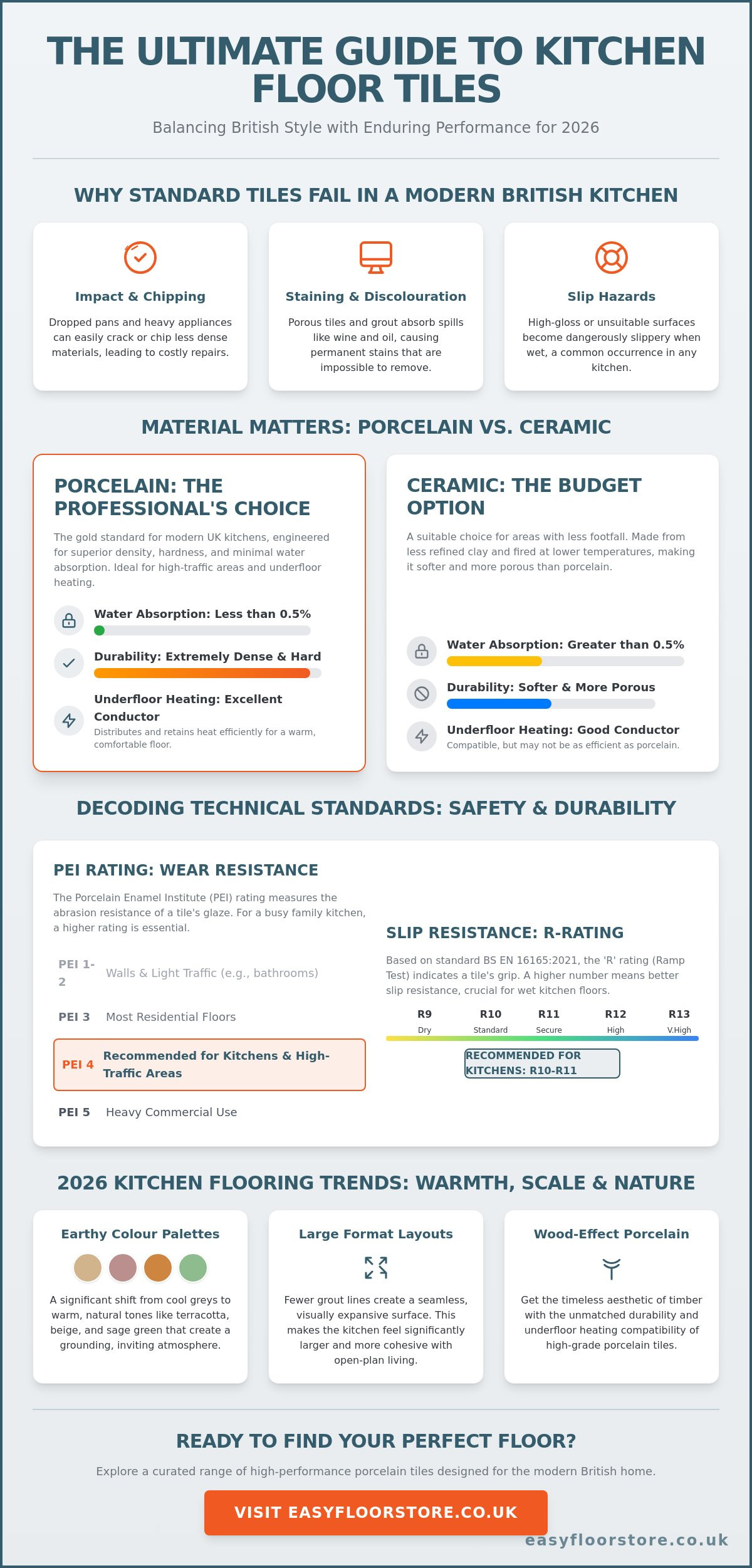
In a domestic setting, "high-traffic" is defined by a combination of high-frequency footfall, the static load of heavy appliances, and frequent exposure to chemical cleaners. A busy family kitchen can easily see over 50 "passes" per hour during peak times, creating significant wear on the tile's glaze. You also have to consider impact resistance. Dropped cookware creates a concentrated force that can shatter lower-grade ceramic. Specialist kitchen tiles are engineered with lower porosity, meaning they won't absorb wine or oil spills that lead to permanent discolouration in the grout or the tile body itself.
Balancing Aesthetics with Everyday Performance
Practicality doesn't mean you have to sacrifice your design vision. While clinical, high-gloss finishes were once the standard, 2026 trends show a move toward textured, matt surfaces that mimic natural stone or wood. These finishes are psychologically grounding and feel warmer underfoot. They're also incredibly practical. A lightly textured surface in a warm beige or soft terracotta is far more forgiving than a solid dark colour, as it cleverly hides pet hair and minor dust between cleans. As kitchens continue to merge with outdoor living spaces, using a consistent style of indoor and outdoor tiles creates a seamless visual flow that makes your home feel significantly larger and more cohesive.
Material Matters: Porcelain vs Ceramic for High-Traffic Kitchens
Choosing between porcelain and ceramic is often the first major decision you'll face when browsing floor tiles for kitchen renovations. While they might look identical on a display rack, their internal composition and manufacturing processes dictate how they'll perform under the daily pressure of a busy home. Porcelain is essentially the heavyweight champion of the tiling world. It's crafted from a more refined clay and fired at significantly higher temperatures than ceramic, resulting in a material that is denser, harder, and far less porous. This technical superiority is why porcelain has become the gold standard for modern UK kitchens, especially in open-plan areas that lead directly to gardens or patios.
A common misconception is that porcelain tiles feel inherently colder than other materials. In reality, porcelain is an exceptional thermal conductor, making it the ideal partner for underfloor heating systems. It retains and distributes heat more efficiently than ceramic, turning what could be a chilly surface into a warm, inviting floor during the British winter. If you're currently weighing up these technical benefits, exploring the curated range of porcelain and indoor tiles at Easy Floor Store can help you visualise how these high-performance materials fit your specific design vision.
The Superiority of Porcelain in Modern Kitchens
The primary reason professionals recommend porcelain for high-traffic zones is its incredibly low water absorption rate. For a tile to be classified as porcelain, it must have a water absorption rate of less than 0.5%. During the vitrification process, the high-temperature firing causes the minerals to melt and fuse together, creating a glass-like structure that is virtually impenetrable by liquid. This density also allows for the production of "through-body" porcelain, where the colour and pattern run all the way through the tile. If you happen to drop a heavy pan and cause a small chip, the damage is almost invisible because the colour is consistent throughout the material. This level of resilience is vital for maintaining UK slip resistance standards over many years of use.
Ceramic Tiles: When to Consider Them
Ceramic tiles are generally softer and easier to cut, which can make them a budget-friendly option for certain areas. However, their higher porosity and lower impact resistance mean they're rarely the best choice for a primary kitchen floor. They're better suited for:
- Low-traffic utility rooms where heavy footfall isn't a factor.
- Wall splashbacks where the material won't face impact or abrasion.
- Secondary kitchens or pantry areas with limited daily use.
Navigating Technical Standards: Slip Resistance and Durability Grades
Technical data sheets shouldn't be intimidating. While the colour and texture of your chosen floor tiles for kitchen use are the first things you'll notice, the numbers on the side of the box determine whether that floor remains safe and beautiful for a decade. Understanding these metrics allows you to move beyond surface-level aesthetics and invest in a product designed for the specific pressures of a British household. For those seeking a comprehensive expert-led guide to kitchen flooring, mastering these technical grades is the most effective way to narrow down your choices.
Professional installers look for two primary indicators: the R-rating for slip resistance and the PEI scale for surface wear. In a spill-prone environment like a kitchen, you also need to consider the Pendulum Test Value (PTV). The Health and Safety Executive recommends a PTV of 36 or higher in wet conditions to ensure a low slip potential. These figures aren't just for commercial spaces; they're your best insurance against domestic accidents. Reading a technical specification sheet like a professional means looking past the marketing descriptions and verifying these specific certifications before you commit to a purchase.
Understanding R-Ratings for Kitchen Safety
The R-rating system classifies how much friction a tile provides underfoot. For a standard domestic kitchen, R10 is widely considered the "sweet spot." It offers enough grip to prevent slips from water or grease splashes without being so textured that it traps dirt. If you choose an R9 tile, it may feel smoother and easier to mop, but it can become dangerously slick with even a small amount of moisture. Conversely, an R11 rating is excellent for high-slip areas or transition zones leading to a garden, though it requires a bit more effort to keep clean. Modern manufacturing has debunked the myth that anti-slip tiles must feel like sandpaper; many high-end porcelain ranges now offer a "soft-touch" finish that provides grip only when the surface becomes wet.
The PEI Scale: Measuring Surface Wear Resistance
The PEI rating system is a standardised measure of a glazed tile's resistance to abrasive wear from foot traffic and grit. In a high-traffic kitchen, installing a PEI 2 or 3 tile is a recipe for disappointment. Within a year, you'll likely see "traffic lanes" where the glaze has dulled or scratched in front of the sink and cooker. For a floor that lasts, PEI Grade 4 is the minimum requirement, whilst Grade 5 is often used in commercial settings and offers ultimate peace of mind. A higher PEI rating ensures the decorative surface remains intact even when subjected to the abrasive action of chairs being moved or heavy footfall from pets and children.
Roundup: The Best Kitchen Floor Tile Styles for 2026
Style trends for 2026 have moved decisively away from the cold, clinical greys of the last decade. Instead, we're seeing a shift toward biophilic textures and organic warmth that bring a sense of calm into the heart of the home. When selecting floor tiles for kitchen spaces, you're no longer restricted to basic squares or repetitive patterns. Modern porcelain manufacturing now allows for incredibly realistic replications of timber, marble, and limestone, providing the evocative aesthetic of natural materials with the structural resilience we've discussed in previous sections. These designs don't just look better; they're engineered to handle the unique pressures of a multi-functional British household.
Wood Effect Floor Tiles: The Timeless Aesthetic
A frequent dilemma for homeowners is deciding between porcelain and engineered wood flooring for their kitchen renovation. Whilst engineered wood is a premium, beautiful choice, wood-effect porcelain tiles offer a distinct advantage in damp or spill-prone environments. They won't warp, swell, or stain when exposed to moisture, making them a far more forgiving choice for families with young children or active pets. These tiles are also the superior partner for underfloor heating, as porcelain conducts and retains heat more efficiently than timber. For those seeking a classic British look, using shorter porcelain planks in a herringbone pattern adds architectural depth without the high maintenance burden of traditional hardwood.
Large Format Tiles for Seamless Open-Plan Living
If you want to make a compact UK kitchen feel significantly more expansive, large format tiles are your most effective design tool. Using 600x1200mm or 800x800mm slabs creates a sense of visual continuity by reducing the number of grout lines that break up the floor. When these tiles feature "rectified" edges, they've been precisely machined after firing to ensure perfectly straight sides. This allows your installer to use ultra-fine joints of just 2mm, resulting in a seamless, "poured" look that is both sophisticated and incredibly easy to clean. You should ensure your subfloor is professionally levelled before installation, as these larger slabs have less "flex" than smaller formats and require a perfectly flat base.
Patterned and Herringbone Layouts
Patterned tiles are experiencing a major resurgence as a way to define specific zones within a large, multi-functional kitchen/diner. Victorian-inspired geometric patterns in muted, earthy tones can act as a "rug" under a dining table or anchor a central kitchen island. Planning is vital here to avoid awkward, thin cuts at the room's perimeter where they'll be most visible. By dry-laying your pattern first, you can ensure the layout feels balanced and intentional. If you're ready to transform your space with these latest designs, you can explore our full range of high-performance kitchen floor tiles to find the perfect match for your project.
Ensuring a Lasting Finish: Grout Selection and Tile Care
Even the most resilient floor tiles for kitchen spaces can fail if the foundation or the finishing touches are overlooked. Whilst we've focused on the durability of the tiles themselves, the substrate preparation and grout selection are what truly guarantee a floor that lasts for decades. Substrate preparation is where many projects succeed or fail. Kitchens house heavy items like range cookers and American-style fridge-freezers, which exert significant static pressure. If there's even a millimetre of "flex" in your subfloor, your tiles will eventually crack. It's vital to ensure your base is rigid and level before the first tile is laid.
Think of grout as the "weakest link" in your kitchen's armour. Because it's often more porous than the tile itself, it's the most likely place for stains, mould, and moisture to take hold. Investing in the right materials during the installation phase saves hours of scrubbing later. Choosing a high-performance grout ensures that your floor remains hygienic and visually striking even after years of spills and heavy footfall.
Choosing the Right Grout for High-Traffic Zones
Selecting the right grout goes beyond picking a colour that matches your aesthetic. For high-traffic British homes, epoxy grout is widely considered the gold standard for hygiene and stain-proofing. Unlike traditional cement-based options, epoxy is non-porous and chemically resistant. This means that if you spill red wine or olive oil, the liquid sits on the surface rather than soaking into the joints. Many modern formulations also include anti-bacterial and mould-resistant properties. You might choose to colour-match your grout to your tiles for a seamless look, or opt for a contrasting shade to make a bold design statement with a herringbone layout.
Cleaning and Maintenance Best Practices
Maintaining your floor doesn't require a complex regime, but it does require the right tools. Avoid acidic or abrasive cleaners that can etch the glaze or weaken the grout over time. A neutral, pH-balanced cleaner is usually all you need to keep the surface looking as fresh as the day it was installed. The debate over steam mops continues amongst homeowners; whilst they're generally safe for high-quality porcelain, you should always verify this with the manufacturer's care instructions first. To avoid any surprises, always test a new cleaning product on a spare tile offcut before applying it to the entire floor.
Designing a Kitchen Floor Built for Life
Selecting the right floor tiles for kitchen environments involves more than just picking a favourite colour. It requires a strategic look at technical specifications like PEI durability and R-rated slip resistance to ensure your home remains safe and stylish for years to come. By opting for high-performance porcelain and pairing it with advanced epoxy grouts, you'll create a foundation that handles everything from heavy appliances to daily spills without losing its lustre. We've already explored how the 2026 shift toward warmer tones and large formats can truly expand a room's potential.
As specialists in premium brands like Ted Todd and Woodpecker, we provide the award-winning knowledge needed to elevate your renovation. We offer expert technical support for high-traffic specifications and provide national UK delivery on our entire range of indoor and outdoor tiles. We're committed to making your purchasing journey as seamless and stress-free as possible.
Browse our curated collection of premium kitchen floor tiles today to find the perfect match for your home. Your dream kitchen is just a few clicks away, and we're ready to help you make it a reality.
Frequently Asked Questions
Is porcelain or ceramic better for a kitchen floor?
Porcelain is the superior choice for a kitchen floor due to its density and low water absorption. Whilst ceramic is a budget-friendly option for walls, it lacks the impact resistance needed for high-traffic zones. Porcelain's vitrification process makes it virtually impenetrable, ensuring it survives dropped pans and heavy footfall without cracking. This structural integrity is essential for a room that serves as the heart of the home.
What is the most durable tile for a high-traffic kitchen?
Through-body porcelain with a PEI rating of 4 or 5 offers the highest level of durability. These tiles are engineered to withstand abrasive wear and heavy static loads, ensuring the surface remains pristine even in the busiest British households. Because the colour runs through the entire tile body, any accidental chips remain almost invisible over time. It's a robust solution for families and pet owners alike.
Are kitchen floor tiles cold if I don't have underfloor heating?
Tiles naturally adopt the ambient temperature of the room, which can feel cool to the touch during the winter months. However, their excellent thermal conductivity makes them the most efficient partner for underfloor heating systems. They conduct and retain heat exceptionally well, providing a consistent and comfortable warmth. If you don't have heating installed, choosing warmer earth tones can help the space feel more psychologically inviting.
What R-rating do I need for my kitchen floor tiles?
An R10 rating is the ideal standard for most domestic kitchens. This level of slip resistance provides enough grip to handle common spills whilst remaining easy to clean. It ensures your floor tiles for kitchen use are safe for the whole family without the maintenance burden of highly textured industrial surfaces. It's a reliable choice that balances practical safety with a sophisticated, smooth-to-the-touch finish.
How do I stop my kitchen floor tiles from being slippery when wet?
Selecting tiles with a Pendulum Test Value (PTV) of 36 or higher in wet conditions is the most effective prevention method. You should also opt for matt or lightly textured finishes rather than high-gloss glazes, as these provide better mechanical grip. Keeping the floor free from grease is equally vital; even the most slip-resistant tiles become hazardous if a film of cooking oil is allowed to build up.
Can I lay new kitchen tiles over an existing floor?
You can technically lay tiles over existing hard flooring, but we generally advise against it. Removing the old surface allows you to inspect the substrate for cracks or dampness, ensuring the new installation has a perfectly stable foundation. A fresh start prevents height issues with doors and appliances. It also guarantees the best possible bond between the adhesive and the subfloor for long-term security.
Why are my kitchen floor tiles cracking?
Cracking is usually caused by movement in the subfloor or the use of an inflexible adhesive. If the substrate isn't rigid enough to support heavy appliances, the resulting tension will cause even the strongest porcelain to fracture. Proper preparation, such as installing backer boards or decoupling membranes, is the best way to prevent this. It ensures your floor tiles for kitchen spaces can handle the weight of modern living.
How much does it cost to tile a kitchen floor in the UK?
Tiling costs are influenced by the complexity of the layout and the condition of your subfloor. Professional labour rates typically range from £200 to £350 per day, with an average square metre rate of around £50 for the installation itself. You should also factor in approximately £10 per square metre for high-quality adhesives and grout. Preparation work, such as screeding, may add between £14 and £21 per square metre.