



By 2026, the traditional trade-off between the timeless beauty of natural oak and the practical resilience of stone has finally vanished. You might feel that a high-end renovation requires weeks of disruption and a team of specialists, but the latest advancements in flooring technology tell a different story. Most British homeowners share your concern about moisture damage in bathrooms or the anxiety that every minor subfloor imperfection will ruin a new installation. It is a common worry that often stalls even the most exciting home improvements.
This guide demonstrates why click LVT flooring has emerged as the premier choice for a sophisticated, durable, and DIY-friendly transformation. You'll discover how to navigate technical terms like SPC rigid core and wear layers with confidence. We will also explore the shift towards warm, honey-toned planks and matte finishes that define this year's most desirable interiors. From the waterproof stability of the Woodpecker Brecon range to the elegant appeal of herringbone patterns, we provide the expert clarity you need to achieve a stress-free, beautiful floor that offers genuine long-term value.
Key Takeaways
- Learn how modern click LVT has evolved into a sophisticated, multi-layered solution designed to simplify the renovation process without sacrificing style.
- Understand the technical differences between SPC and WPC rigid cores to select a floor that provides maximum stability for your home's environment.
- Compare the speed and cost-effectiveness of click LVT flooring against traditional glue-down methods to find the best fit for your project timeline.
- Identify the ideal wear layer and plank thickness required to withstand the specific foot traffic and daily behaviour of your household.
- Discover why investing in premium collections from specialists like Woodpecker and Ted Todd ensures a more secure locking mechanism and superior durability.
What is Click LVT Flooring? The Modern Standard for Sophisticated Renovations
Home renovations often feel like a race against time, but click LVT flooring has redefined the standard for fast, high-quality transformations. Unlike the thin, adhesive-backed sheets of the past, modern Luxury Vinyl Tile (LVT) is a precision-engineered product. It uses a glueless locking mechanism that allows planks to snap together seamlessly. This evolution from traditional Vinyl flooring to contemporary rigid core technology represents a significant shift in how we approach interior design. For a specialist, this isn't just about convenience; it's about providing a stable, high-end finish that survives the daily rigours of a busy UK home.
The primary appeal of this modern solution is the ability to achieve premium colours and textures with minimal downtime. You can transform a room in a single afternoon without the mess of adhesives or the long curing times associated with other materials. It is the go-to choice for British homeowners who value their time as much as their home's aesthetic. By choosing a click system, you're investing in a floor that looks like authentic timber or stone but performs with the resilience of a modern composite.
The Anatomy of a Luxury Vinyl Tile
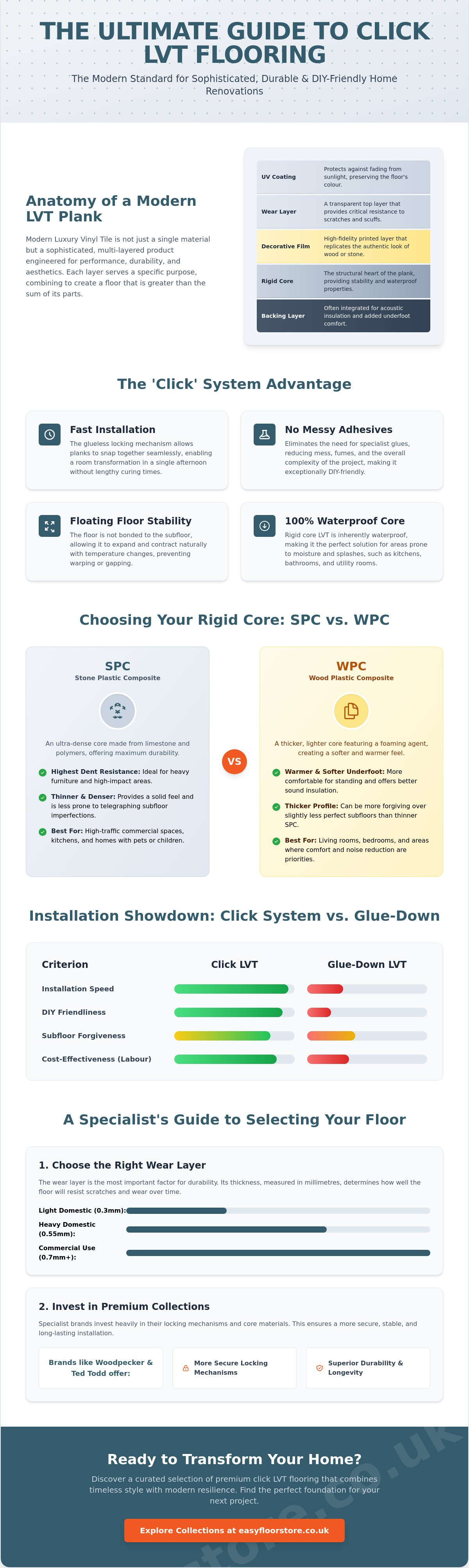
To understand why this material feels so substantial underfoot, you must look beneath the surface. A standard plank consists of several specialised layers. At the top, a UV coating prevents fading from sunlight, followed by a transparent wear layer that guards against scratches. The visual character lives in the decorative film, which uses high-fidelity printing to replicate the organic grains of light oak or the cool textures of slate with incredible accuracy. Beneath this, the rigid core provides structural integrity, while an integrated backing layer often adds acoustic insulation. This complex construction ensures your floor remains quiet and comfortable, even in high-traffic areas like the hallway or kitchen.
Why "Click" Technology is a Game Changer for Homeowners
The innovation lies in the mechanical locking systems, such as Uniclic or Valinge, found amongst premium brands like Woodpecker. These systems create a "floating floor" that isn't bonded to the subfloor. This allows the planks to handle natural expansion and contraction without warping or gapping, which is a common issue with older materials. You can achieve a professional result in a fraction of the time required for traditional glue-down methods. There is no need for messy adhesives or specialist tools; the planks simply lock into place, creating a watertight and durable surface immediately. This speed of installation makes it the perfect partner for fast-paced 2026 renovation projects.
The Science of Rigid Core: Why SPC and WPC are Perfect for UK Homes
For British homeowners, the unpredictable humidity and temperature shifts of our climate present a unique challenge for floor coverings. Traditional materials often struggle with the damp mornings and centrally heated evenings typical of a UK winter. Rigid core click LVT flooring provides the structural answer to these environmental demands. By replacing the flexible base of old-fashioned vinyl with a solid, engineered core, these planks offer unmatched dimensional stability. This means your floor won't warp, buckle, or gap as the seasons change. Perhaps most importantly, these materials are 100% waterproof as a standard, making them as suitable for a splash-prone bathroom as they are for a busy hallway.
The Resilient Floor Covering Institute (RFCI) sets the benchmark for these products, ensuring they meet strict performance and safety standards. When you choose a rigid core product, you're opting for a floor that balances technical performance with everyday comfort. You can explore a curated selection of these high-performance materials at Easy Floor Store to find the perfect match for your home's specific requirements.
SPC vs WPC: Which Core Should You Choose?
Choosing between the two main types of rigid core depends entirely on the behaviour of your household. Stone Plastic Composite (SPC) uses a limestone-based core to create an ultra-dense, thin, and incredibly dent-resistant plank. It's the ideal choice for high-traffic areas where heavy furniture or dropped kitchenware might be a concern. Wood Plastic Composite (WPC) incorporates a foaming agent that makes the plank slightly thicker, softer, and warmer underfoot. This makes WPC a favourite for bedrooms or upper-floor living spaces where acoustic insulation and a cushioned feel are priorities.
- SPC: Best for kitchens, bathrooms, and entryways due to its extreme durability.
- WPC: Best for bedrooms and lounges where comfort and sound dampening matter most.
Solving the Subfloor Dilemma: Hiding Imperfections
One of the most frustrating aspects of renovation is "telegraphing." This occurs when the bumps, ridges, or grout lines of an old subfloor eventually show through a new, thin floor covering. The rigidity of SPC and WPC cores effectively solves this problem. Because the planks are stiff, they bridge minor gaps and unevenness rather than settling into them. The inherent stiffness of a rigid core allows the floor to bridge minor subfloor dips and peaks that would otherwise require expensive levelling compounds. This technical advantage significantly reduces the time and labour costs associated with subfloor preparation, allowing for a faster and more cost-effective installation process.
Click LVT vs Glue-Down: Making the Right Choice for Your Project
When you're planning a swift home update, the choice between click and glue-down methods often determines the entire pace of your project. There is a persistent myth that glue-down is the only "professional" way to install Luxury Vinyl Tile. Whilst glue-down has its place in high-traffic commercial settings, click LVT flooring is frequently the superior choice for a modern British home renovation. It balances structural integrity with a level of flexibility that traditional wet-lay methods simply cannot match. You don't have to sacrifice quality for speed; you're simply choosing a more efficient engineering solution.
One of the most significant advantages for renovators is the ability to install click systems directly over existing hard surfaces. If your current floor is level and secure, you can often skip the destructive process of ripping up old tiles or timber. This dramatically reduces dust, waste, and labour time. Think about long-term maintenance too. If a single plank gets gouged by a heavy appliance, a click system allows you to unclick the section and replace the damaged piece. With glue-down, you're looking at a much more invasive and messy repair that often requires professional help.
When to Opt for Click LVT
Choosing a click system is particularly wise for DIY enthusiasts or those working within tight deadlines. Many premium options now feature an integrated underlay, which eliminates the need to purchase and lay separate rolls. This not only saves money but also provides a consistent acoustic barrier across the entire room. According to the Resilient Floor Covering Institute (RFCI) guide to rigid core flooring, these floating systems are engineered to handle the minor subfloor variations found in older UK properties, making them a reliable and forgiving alternative to traditional adhesives. It is the favourite choice for anyone wanting to avoid the sticky mess and precision required by wet-lay products.
The Limitations of Glue-Down in Fast Renovations
Glue-down installations require a near-perfect subfloor. This usually involves screeding and smoothing, adding days to your timeline whilst you wait for compounds to dry. Adhesives also come with a waiting period before you can move furniture back into the room. There is also the issue of "off-gassing" from certain glues, which can leave a lingering chemical scent in your living space. For a fast, clean, and adaptable renovation, the floating nature of a click floor offers a level of freedom that permanent adhesives simply won't allow. It allows you to enjoy your new space almost the moment the last plank is clicked into place.
A Specialist’s Guide to Selecting Your Click LVT Floor
Selecting the right floor involves more than just picking a favourite pattern. It requires a thoughtful assessment of how your household functions. As a specialist, I often see homeowners focus purely on thickness, yet the true performance of click LVT flooring lies in the synergy between its wear layer and its aesthetic finish. You should also consider how the material interacts with your home's infrastructure. For instance, click LVT is an exceptional partner for underfloor heating systems. Its composition allows for efficient heat transfer, ensuring your space remains warm and inviting during the damp British winter without the risk of the planks warping or losing their structural integrity.
Choosing the right colour and format is also a powerful tool to organise your living space. Light oak tones can make a compact terraced house feel airy and expansive, whilst deeper, richer textures can bring a sense of grounded luxury to a modern apartment. To find the perfect balance for your project, you can browse our curated LVT collections to see these technical specifications in practice.
Understanding Wear Layers: 0.3mm vs 0.55mm
The wear layer is the transparent shield that protects the decorative design of your floor. For light domestic use, such as a guest bedroom, a 0.3mm wear layer is often sufficient. However, for the high-traffic "behaviour" of a busy family home, we always recommend a 0.55mm layer. This extra protection is vital if you have pets with sharp claws or if your hallway frequently sees muddy boots and grit from the garden. While total plank thickness provides stability, it is the density of the wear layer that truly dictates how well your floor resists the scars of daily life.
Aesthetic Trends: Herringbone, Wide Plank, and Stone Effects
In 2026, we are seeing a significant resurgence of the classic British parquet look, now made accessible through herringbone click LVT. This allows you to achieve a complex, high-end pattern without the traditional labour costs of wood blocks. Grey remains a staple for urban renovations, but light oak and honey tones are becoming the preferred choice for those seeking a more organic feel. Look for "registered embossed" textures amongst premium ranges. This technology ensures the surface texture perfectly matches the grain of the printed wood, creating a tactile experience that is indistinguishable from real timber.
The Role of Underlay in Click LVT
The underlay serves as the quiet hero of your installation. Many modern click products come with an integrated underlay, which simplifies the process and ensures the locking mechanism is perfectly supported. If your chosen floor requires a separate underlayment, it is essential to select one designed for LVT rather than laminate. A dedicated underlay provides critical decibel reduction, which is a legal and practical necessity for flats and upper-floor rooms. Always verify that your underlay is compatible with underfloor heating to maintain the thermal efficiency of your home.
Premium Click LVT: Exploring Ted Todd and Woodpecker Collections
Choosing a floor for a fast-track renovation doesn't mean you have to settle for mass-market compromises. At Easy Floor Store, we've curated a selection of high-end brands that elevate click LVT flooring from a functional necessity to a genuine design statement. Investing in premium names like Ted Todd or Woodpecker ensures you benefit from superior locking mechanisms that won't fail under the pressure of daily use. We operate on a supply-only model, which means our focus remains entirely on sourcing the finest materials. This allows you or your chosen fitter to complete the installation with absolute confidence in the product's structural integrity.
A premium floor is an investment in your home's future value. When you select a brand with a proven track record, you're not just buying a surface; you're buying decades of engineering expertise. These collections are designed to handle the specific environmental challenges of British homes, from damp entryways to sun-drenched conservatories. You can browse our full range of premium click LVT flooring to find a solution that matches your vision for a sophisticated, high-performance interior.
Ted Todd: British Design Excellence
Ted Todd is synonymous with British design excellence. Whilst they are world-renowned for their engineered wood, their LVT ranges carry that same artisan spirit into the world of resilient flooring. They offer unique colours and hand-crafted finishes that you simply won't find in budget collections. This attention to detail adds tangible value to your property. Their click systems are engineered for maximum stability, ensuring that the sophisticated look you choose today remains flawless for years to come. It's the perfect choice for those who want the prestige of a designer brand with the practical benefits of modern vinyl.
Woodpecker Flooring: The Stratex Revolution
Woodpecker Flooring has led the way in rigid core innovation with their Stratex technology. This SPC-based core is specifically designed for fast-track projects where durability is non-negotiable. Stratex provides a rock-solid foundation that is 100% waterproof and incredibly stable, even over large areas. Beyond the technical performance, Woodpecker maintains a strong focus on sustainability, ensuring their products are as kind to the environment as they are to your home. Backed by robust warranties, their collections offer a technical powerhouse that doesn't sacrifice the natural beauty of real timber or stone textures.
Transform Your Home with Professional Precision
Achieving a high-end interior no longer requires the compromise of a lengthy, disruptive renovation. You've seen how click LVT flooring bridges the gap between sophisticated British aesthetics and the practical demands of modern living. By selecting the correct rigid core technology and a robust wear layer tailored to your household's behaviour, you can ensure your new floor survives everything from muddy paws to heavy kitchen foot traffic. These advancements allow you to focus on the creative joy of your project rather than the stress of technical complications.
As a trusted specialist, we provide the high-performance SPC and WPC options required for a flawless finish. We are an authorised retailer for both Ted Todd and Woodpecker Flooring, ensuring you have access to the most resilient and beautiful materials on the market. With our expert technical support and nationwide UK delivery, the perfect renovation is closer than you think. Your vision for a beautiful, durable home is within reach, and we're here to help you make it a reality.
Explore our curated collection of premium Click LVT flooring today and take the first step toward a seamless home transformation. We look forward to supporting your next project.
Frequently Asked Questions
Can I install click LVT flooring over my existing tiles or laminate?
You can often install these planks directly over existing ceramic or stone tiles, provided the surface is level and the grout lines aren't excessively wide. Rigid core technology is specifically designed to bridge minor subfloor dips without settling. However, you should always remove old laminate or carpet before starting. These soft or floating surfaces don't provide the stable, solid foundation required to support the locking mechanism of your new floor.
Is click LVT flooring 100% waterproof for use in bathrooms and kitchens?
High-quality click LVT flooring is entirely waterproof, which makes it a perfect solution for the most demanding rooms in your home. Unlike natural timber or standard laminate, the synthetic core and surface layers won't swell or degrade when exposed to standing water. This moisture resistance ensures your floor remains beautiful and structurally sound in humid environments like family bathrooms or splash-prone kitchens.
How do I clean and maintain my click luxury vinyl tiles to ensure they last?
Keeping your floor in top condition involves regular sweeping or vacuuming with a soft brush to remove abrasive grit. For a deeper clean, use a damp mop with a pH-neutral cleaner specifically formulated for luxury vinyl. You should avoid steam mops, as the intense heat can potentially weaken the adhesive bonds within the planks. Using felt pads under heavy furniture is also a wise step to prevent accidental scratches on the wear layer.
Does click LVT flooring require a separate underlay during installation?
The requirement for underlay depends on the specific product you select from our collection. Many premium options, such as the Woodpecker Brecon range, come with a high-performance acoustic underlay already integrated into the plank. If your chosen floor doesn't have an attached backing, you'll need a dedicated LVT underlay. This ensures the floor feels comfortable underfoot and helps dampen impact noise between different levels of your home.
Is click LVT compatible with electric and water-based underfloor heating?
Most modern click systems are fully compatible with both electric and water-based underfloor heating. The material's thin profile and dense core allow for excellent heat transfer, ensuring your living space warms up efficiently. It's vital to ensure your heating system doesn't exceed the manufacturer's recommended temperature limit, typically 27°C. This precaution prevents the vinyl from softening and maintains the integrity of the click joints.
How long does a typical click LVT floor last in a high-traffic hallway?
In a busy British household, a premium click LVT flooring installation can easily last between 15 and 25 years. The longevity of your floor is largely determined by the thickness of its wear layer. For hallways that see constant use from pets and boots, we recommend a 0.55mm wear layer. This provides a robust shield against the daily behaviour of a high-traffic home, ensuring the decorative design remains pristine for decades.
Can I install click LVT myself, or do I need a professional floor fitter?
The "Uniclic" and "Valinge" style systems are designed specifically for straightforward DIY installation. If you're comfortable with basic measurements and have a steady hand for cutting planks, you can achieve a professional-looking result without the cost of a fitter. However, if your project involves complex subfloor levelling or intricate patterns, you might prefer to hire a specialist. We provide the high-end materials you need to ensure any installer can deliver a flawless finish.
What is the difference between SPC and standard click vinyl flooring?
SPC (Stone Plastic Composite) features a much denser, rigid core than standard, flexible click vinyl. This limestone-based core provides significantly better dent resistance and dimensional stability. Standard vinyl can sometimes expand or contract in sun-drenched conservatories, but SPC remains stable. This makes it the superior choice for UK homes where temperature fluctuations are common, providing a floor that won't buckle or gap over time.